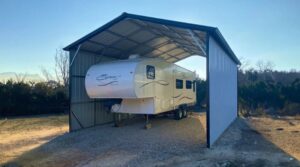
Your recreational vehicle represents freedom, adventure, and a significant financial investment. Whether you own a 45-foot Class A motorhome, a compact Class B camper van, or a fifth-wheel trailer, proper shelter isn’t just about keeping rain off—it’s about preserving your lifestyle and protecting an asset that can cost anywhere from $75,000 to $300,000.
According to industry data, RVs left exposed to the elements can experience up to 40% faster depreciation compared to sheltered units. UV damage alone can fade exterior paint, crack rubber seals, and degrade roofing materials within just 2-3 years of constant sun exposure.
This comprehensive guide explores creative RV shelter solutions that balance protection, functionality, and budget—helping you make informed decisions about safeguarding your investment.
Why Modern RV Owners Need Dedicated Shelter Solutions
The Hidden Costs of Outdoor Exposure
Leaving your RV unsheltered creates multiple risks that compound over time:
Weather-Related Damage:
- UV radiation deteriorates paint, decals, and rubber components
- Heavy rainfall can overwhelm roof seals, causing interior water damage
- Hail storms create dents in aluminum siding and fiberglass caps
- Wind exposure rocks the vehicle, stressing suspension and frame connections
- Snow accumulation adds weight to roofs not designed for static loads
Regional Climate Challenges:
Different areas face specific threats. In the Southeast, high humidity promotes mold and mildew growth. The Southwest battles intense UV exposure year-round. Northern states must contend with snow loads that can reach 60-70 pounds per square foot in states like Wisconsin and Minnesota, according to the American Society of Civil Engineers.
Protection Beyond Weather: Security and Convenience
Modern RV shelters offer advantages beyond simple coverage:
- Theft deterrence through enclosed structures with secure access points
- Immediate access for weekend trips without off-site storage fees
- Maintenance convenience with protected workspace for winterization and repairs
- Property value enhancement from well-designed permanent structures
- Additional storage for camping gear, outdoor equipment, and seasonal items
Types of RV Shelter Solutions: Finding Your Perfect Match
Permanent Metal Building Solutions
Metal structures dominate the RV shelter market due to their exceptional durability-to-cost ratio and low maintenance requirements.
Vertical Roof Metal Carports (Premium Weather Protection)
Vertical roof carports feature panels running from peak to eave, creating the most effective water and snow shedding design.
Key Specifications:
- Roof panels: 26-29 gauge galvanized steel
- Standard heights: 12, 14, or 16 feet
- Width options: 18-40 feet
- Length: Custom up to 60+ feet
- Wind resistance: Certified for 130+ mph in most designs
Best For: Areas with heavy rainfall, significant snow loads, or severe weather patterns. Ideal for Class A motorhomes and tall fifth-wheels requiring maximum headroom.
Cost Range: $8-20 per square foot installed
Boxed Eave Metal Carports (Traditional Aesthetic)
These A-frame designs feature horizontal roof panels with finished trim along the eaves, blending well with residential architecture.
Advantages:
- Attractive appearance complementing home design
- Good weather protection for moderate climates
- Mid-range pricing between regular and vertical styles
- Available in multiple color combinations
Limitations: Not recommended for areas with snow loads exceeding 30 psf
Cost Range: $10-16 per square foot installed
Regular Roof Metal Carports (Budget-Friendly Option)
The most economical permanent metal shelter features rounded eaves and horizontal panels running front to back.
Specifications:
- Maximum recommended length: 35 feet
- Suitable for light snow and moderate wind zones
- Quick installation (often 2-3 days)
- Limited height clearance options
Best For: Travel trailers, Class B campers, and popup trailers in mild climates with minimal snow.
Cost Range: $6-14 per square foot installed
Fully Enclosed Metal Garages (Ultimate Protection)
Enclosed RV garages provide complete protection from weather, theft, and pests while offering workspace and additional storage.
Premium Features:
- Roll-up or sectional overhead doors (12-14 feet high)
- Walk-in access doors with deadbolts
- Window options for natural lighting
- Insulation packages (R-13 to R-30)
- HVAC compatibility
- Electrical rough-in availability
Security Enhancements:
- Reinforced door tracks with tamper-resistant fasteners
- Interior slide locks
- Smart keypad access systems
- Integrated alarm compatibility
Cost Range: $15-35 per square foot installed
Temporary and Portable Shelter Options
Portable Fabric Carports
Heavy-duty polyethylene or PVC fabric stretched over a tubular steel frame provides temporary protection.
Advantages:
- Low initial cost ($500-2,500)
- No permanent foundation required
- Relocatable design
- Fast setup (4-8 hours)
Disadvantages:
- Limited lifespan (3-7 years typical)
- Fabric degrades from UV exposure
- Lower wind resistance (typically 60-70 mph maximum)
- May not comply with local building codes
Best For: Renters, seasonal protection, or temporary staging areas
Portable Metal Carports
Lightweight metal panels on a semi-permanent frame offer better durability than fabric alternatives.
Features:
- 26-29 gauge metal panels
- Modular assembly design
- Basic anchoring systems
- Limited customization
Cost Range: $1,200-4,000 for typical RV sizes
Traditional Building Materials
Wooden RV Shelters
Traditional wood-frame construction appeals to homeowners seeking architectural harmony with existing structures.
Considerations:
- Higher upfront costs ($15-30 per square foot)
- Requires regular maintenance (painting, sealing every 2-4 years)
- Susceptible to rot, insect damage, and warping
- Limited span capabilities without interior supports
- Fire risk in wildfire-prone regions
Best For: Properties with strict architectural guidelines or HOA requirements
Brick and Mortar Garages
Custom-built masonry structures offer maximum durability and property value enhancement.
Specifications:
- Concrete slab foundation with rebar reinforcement
- Masonry walls (brick, stone, or concrete block)
- Professional roofing systems
- Custom door and window installations
Cost Range: $30,000-80,000+ for typical RV garage sizes
Timeline: 6-12 weeks for complete construction
RV Shelter Sizing Guide: Getting the Dimensions Right

Proper sizing ensures your shelter accommodates your RV with room for access, slide-outs, and future upgrades.
Minimum Clearance Requirements by RV Class
| RV Type | Typical RV Dimensions | Recommended Shelter Size | Minimum Height | Additional Clearance Needed |
|---|---|---|---|---|
| Class A Motorhome | 26-45′ L × 8-8.5′ W × 11-13′ H | 18′ W × 50′ L × 16′ H | 14-16 feet | 18″ sides, 24″ front/rear |
| Class B Camper Van | 17-24′ L × 7′ W × 9-10′ H | 20′ W × 24′ L × 14′ H | 12-14 feet | 12″ sides, 18″ front/rear |
| Class B+ Motorhome | 21-28′ L × 8′ W × 10-11′ H | 12′ W × 25′ L × 14′ H | 12-14 feet | 12″ sides, 18″ front/rear |
| Class C Motorhome | 21-35′ L × 8′ W × 11-12′ H | 26′ W × 36′ L × 14′ H | 14 feet | 18″ sides, 24″ front/rear |
| Super C Motorhome | 26-45′ L × 8.5′ W × 12-13′ H | 24′ W × 48′ L × 16′ H | 14-16 feet | 24″ sides, 30″ front/rear |
| Fifth Wheel Trailer | 24-40′ L × 8′ W × 12-13′ H | 24′ W × 40′ L × 16′ H | 14-16 feet | 18″ sides, 24″ front/rear |
| Travel Trailer | 12-35′ L × 7-8′ W × 10-11′ H | 30′ W × 40′ L × 14′ H | 12-14 feet | 18″ sides, 24″ front/rear |
| Pop-Up Trailer | 8-16′ L × 7′ W × 4-8′ H (collapsed) | 20′ W × 20′ L × 12′ H | 10-12 feet | 12″ sides, 18″ front/rear |
Critical Measurement Considerations
Height Calculations Must Include:
- Air conditioning units (adds 10-14 inches)
- Satellite dishes or solar panels (adds 6-18 inches)
- Roof vents and exhaust fans (adds 4-8 inches)
- Ladder racks or roof storage (adds 12-24 inches)
Width Considerations:
- Slide-out extensions (adds 24-42 inches per side when deployed)
- Door swing clearance (minimum 36 inches)
- Maintenance access on both sides (recommended 18-24 inches minimum)
Pro Tip: Always round up dimensions and add at least 2 feet to length and width for comfortable maneuvering. A shelter that’s too small creates stress every time you park.
Design Considerations for Maximum Functionality
Foundation Options and Requirements
Your shelter foundation directly impacts long-term stability, moisture control, and usability.
Concrete Slab Foundations (Premium Choice)
Specifications:
- Minimum 4-inch thickness (6 inches for enclosed garages)
- Rebar reinforcement (typically #4 rebar at 18-24″ spacing)
- Vapor barrier underneath
- Proper slope for drainage (1/4 inch per foot minimum)
- Anchor bolt embedment for metal building attachment
Advantages:
- Flat, clean surface for easy movement
- Prevents moisture from ground contact
- Supports workshop equipment and storage
- Increases resale value
- Required by most building codes for enclosed structures
Cost: $6-12 per square foot installed
Gravel Pad Foundations (Mid-Range Option)
Construction Process:
- Excavate 6-8 inches of topsoil
- Install landscape fabric
- Add 4-6 inches of compacted gravel base (3/4″ crushed stone)
- Level and compact thoroughly
Best For: Open carports in well-drained areas
Cost: $2-4 per square foot
Pier and Beam Foundations
Individual concrete piers support the building frame, suitable for sloped terrain or areas with drainage concerns.
Typical Specifications:
- 12-inch diameter concrete piers
- Depth below frost line (varies by region: 12-48 inches)
- Spacing 8-12 feet on center
- Steel post anchors embedded in concrete
Cost: $1,500-5,000 depending on site conditions
Roof Style Selection by Climate Zone
| Climate Zone | Recommended Roof Style | Minimum Slope | Why This Works |
|---|---|---|---|
| Heavy Snow (Northern states) | Vertical Roof | 3:12 or steeper | Sheds snow efficiently, prevents accumulation |
| High Wind (Coastal areas) | Vertical or Boxed Eave | 2:12 minimum | Certified anchoring withstands 130+ mph winds |
| Intense Sun (Southwest) | Any style with reflective coating | 1:12 minimum | Light colors reflect heat, reduce interior temps |
| Heavy Rain (Pacific Northwest, Southeast) | Vertical Roof | 3:12 or steeper | Rapid water runoff prevents pooling |
| Moderate Climate | Boxed Eave or Regular | 1:12 to 2:12 | Cost-effective with adequate protection |
Ventilation Systems for Enclosed Garages
Proper airflow prevents condensation, mold growth, and musty odors that can damage your RV.
Essential Ventilation Components:
- Ridge Vents – Allow hot air to escape from peak
- Soffit Vents – Provide intake air flow
- Gable Vents – Cross-ventilation on end walls
- Exhaust Fans – Mechanical air exchange (recommended: 1 CFM per square foot)
- Louvered Vents – Passive air circulation
Rule of Thumb: Provide 1 square foot of vent area per 150 square feet of floor space
Maximizing Space Inside Your RV Shelter
A well-designed shelter doesn’t just protect your RV—it creates a functional workspace and storage hub.
Vertical Storage Solutions
Overhead Storage Strategies:
- Ceiling-mounted racks for kayaks, paddleboards, and lumber (capacity: 200-600 lbs)
- Pulley systems for seasonal equipment (bikes, generators)
- Mezzanine platforms over the tongue area (50-100 sq ft additional storage)
Installation Tip: Always anchor to structural framing, not just roof panels. Use lag bolts into solid wood or welded attachments for metal buildings.
Wall Organization Systems
Modular Wall Solutions:
- Slatwall panels ($3-8 per sq ft) – Reconfigurable hook and bracket systems
- Pegboard ($15-40 per 4×8 sheet) – Classic tool storage
- Heavy-duty shelving (18-24″ deep) for totes and bins
- Fold-down workbenches (24-48″ wide) that stow when not needed
Specialty Storage Areas:
- Designated hose and cable stations with wall-mounted reels
- Chemical and propane cabinet with ventilation (required by code)
- Shallow tool panels near RV service points
Multi-Function Zones
Create flexible spaces that adapt to different needs:
Workshop Area (Recommended: 10×12 feet minimum)
- Workbench with vice and power outlets
- Tool storage cabinets
- Parts organizing drawers
- Good task lighting (500+ lumens recommended)
Gear Staging Zone
- Shelving for camping supplies
- Hooks for outdoor equipment
- Loading/unloading counter space
Utility Space
- Water hose connections with frost-free faucets
- 30-amp and 50-amp RV electrical hookups
- Air compressor station
- Waste tank dump access (if permitted)
Security Features Worth the Investment
Protecting a six-figure RV requires layered security measures.
Physical Security Enhancements
Access Control Systems:
- Smart keypad entry – Grant temporary codes to service providers ($150-400)
- Biometric locks – Fingerprint access for primary users ($200-600)
- Electronic deadbolts – Remote monitoring and control ($180-450)
Door and Window Fortification:
- Reinforced door frames with continuous hinges
- Impact-resistant polycarbonate windows
- Interior slide bolts on overhead doors
- Tamper-resistant exterior fasteners
Perimeter Deterrents:
- Motion-activated LED floodlights (2,000-4,000 lumens)
- Visible security cameras at entry points
- “Protected by Security System” signage
- Clear sight lines from main residence
Electronic Monitoring Systems
Surveillance Components:
- 4-camera minimum – Cover all entry points and RV parking spot
- Night vision capability – 100+ feet infrared range
- Cloud storage – 30-day recording retention
- Mobile alerts – Real-time notifications of activity
System Cost: $300-1,500 for DIY installation; $1,000-3,000 professionally installed
Environmental Protection Systems
Climate Control:
- Dehumidifiers – Maintain 40-50% relative humidity
- Insulation packages – R-13 walls, R-30 ceiling for enclosed garages
- Radiant barriers – Reflect heat in summer months
Water Management:
- Floor drains with positive slope (1/4″ per foot)
- Gutters and downspouts directing water away from foundation
- French drains if site has poor drainage
Cost Comparison: Finding Your Budget Sweet Spot
Understanding total costs helps you make informed decisions aligned with your financial goals.
Complete Cost Breakdown Table
| Shelter Type | Size Example | Material Cost | Foundation | Installation | Total Estimated Cost | Lifespan | Annual Cost |
|---|---|---|---|---|---|---|---|
| Heavy-Duty Tarp | 20×30 | $150-400 | None | DIY | $150-400 | 2-3 years | $50-200 |
| Portable Fabric Carport | 18×40 | $800-2,000 | $200-500 gravel | DIY/Basic | $1,000-2,500 | 5-7 years | $143-500 |
| Regular Roof Metal Carport | 18×40 | $4,320-10,080 | $1,440-2,880 | Included | $5,760-12,960 | 25-30 years | $192-518 |
| Boxed Eave Metal Carport | 20×40 | $8,000-12,800 | $1,600-3,200 | Included | $9,600-16,000 | 30-40 years | $240-533 |
| Vertical Roof Metal Carport | 24×50 | $9,600-24,000 | $2,400-4,800 | Included | $12,000-28,800 | 30-40 years | $300-960 |
| Enclosed Metal Garage | 30×50 | $22,500-52,500 | $9,000-18,000 | Included | $31,500-70,500 | 40-50 years | $630-1,763 |
| Wooden Carport | 20×40 | $12,000-24,000 | $2,000-4,000 | $3,000-6,000 | $17,000-34,000 | 15-25 years | $680-2,267 |
| Brick/Mortar Garage | 30×50 | $35,000-65,000 | $10,000-15,000 | Included | $45,000-80,000 | 50+ years | $900-1,600 |
Hidden Costs to Factor In
Permitting and Compliance:
- Building permits: $200-1,500 depending on jurisdiction
- Engineering stamps for high wind/snow zones: $300-800
- HOA review fees: $50-500
- Electrical permits for power hookups: $100-400
Site Preparation:
- Land clearing and grading: $500-2,500
- Tree removal: $400-1,200 per tree
- Utility line relocation: $1,000-5,000 if needed
- Drainage improvements: $800-3,500
Ongoing Maintenance:
- Metal buildings: $50-200 annually (touch-up paint, fastener checks)
- Wood structures: $500-1,500 annually (sealing, painting, repairs)
- Fabric covers: $200-400 annual replacement fund
Installation Guide: What to Expect
Timeline From Order to Completion
Metal Building Projects:
- Site evaluation and measurement – 1-2 hours
- Design consultation and ordering – 1-3 days
- Manufacturing – 2-4 weeks
- Foundation preparation – 2-5 days
- Delivery and installation – 1-3 days
- Final inspection – Same day or next day
Total Timeline: 4-6 weeks from order to usable shelter
Brick and Mortar Projects:
- Architectural planning – 2-4 weeks
- Permitting – 2-6 weeks (varies greatly by locality)
- Foundation work – 1-2 weeks
- Framing and roof – 2-3 weeks
- Exterior finishing – 2-4 weeks
- Interior completion – 1-3 weeks
Total Timeline: 3-6 months
DIY vs. Professional Installation
When DIY Makes Sense:
- Portable fabric or lightweight metal carports
- Level site with simple gravel foundation
- Basic tools available (drill, level, wrenches)
- Helper available (minimum 2 people required)
- Time flexible (plan 2-3 full days)
When to Hire Professionals:
- Permanent metal buildings requiring anchoring and certification
- Uneven terrain needing extensive preparation
- Enclosed garages with electrical and insulation
- Any project requiring building permits
- Structures over 15 feet tall
Professional Installation Benefits:
- Proper anchoring for warranty compliance
- Wind and snow load certification
- Code compliance guarantee
- Liability coverage
- Faster completion (typically 1-2 days vs. 3-5 days DIY)
Permitting and Code Compliance Essentials
Building Permit Requirements
Most jurisdictions require permits for:
- Permanent structures over 120-200 square feet
- Buildings with foundations or concrete work
- Any enclosed structure regardless of size
- Structures within setback zones
- Buildings connected to utilities
Exemptions May Include:
- Temporary RV covers without foundations
- Structures under 100-120 square feet in some areas
- Open carports in agricultural zones
Critical: Always verify with your local building department. Fines for unpermitted structures can reach $500-5,000, plus mandatory removal.
HOA and Deed Restriction Considerations
Common Restrictions:
- Required setbacks from property lines (typically 5-25 feet)
- Architectural style matching home exterior
- Color limitations
- Maximum height restrictions
- Screening requirements from street view
- Material specifications (some ban metal buildings)
Pro Strategy: Submit detailed plans including:
- Professional renderings showing integration with existing structures
- Color samples matching approved palettes
- Landscaping plan for visual screening
- Engineered drawings demonstrating quality construction
Engineered Certifications
Structures in certain zones must include engineer stamps certifying:
- Wind load compliance – Coastal regions and high-wind areas (110-180 mph ratings)
- Snow load certification – Northern climates (20-70 psf ratings)
- Seismic resistance – Earthquake-prone regions
Documentation Required:
- Stamped structural drawings
- Anchor bolt placement specifications
- Foundation details
- Material certifications
Maintenance Best Practices for Longevity
Metal Building Maintenance Schedule
Monthly Tasks:
- Visual inspection for loose fasteners or damaged panels
- Check gutters and downspouts for debris
- Test door mechanisms and locks
- Verify security system operation
Quarterly Tasks:
- Tighten any loose bolts (thermal expansion causes gradual loosening)
- Clean panels with mild soap and water
- Inspect seals around doors and windows
- Trim vegetation maintaining 24″ clearance
Annual Tasks:
- Touch up scratched or chipped paint immediately
- Inspect and re-caulk penetrations (lights, vents)
- Lubricate moving parts (doors, hinges)
- Check foundation anchors and footings for settling
Estimated Annual Cost: $50-200 in materials and supplies
Wood Structure Maintenance
Every 2-3 Years:
- Pressure wash exterior
- Apply fresh stain or paint ($500-1,500 professionally)
- Treat for insects in vulnerable areas
- Replace warped or rotted boards
Annual Tasks:
- Inspect for termite activity
- Check roof for damaged shingles
- Clean and seal wood surfaces
- Repair any water damage immediately
Estimated Annual Cost: $500-1,500 including professional services
Fabric Cover Maintenance
Monthly:
- Remove debris and standing water
- Check tension and adjust as needed
- Inspect for tears or UV damage
Seasonal:
- Deep clean with specialized fabric cleaner
- Apply UV protectant spray
- Check frame connections and tighten
Replacement Cycle: Expect to replace fabric every 5-7 years at 60-80% of original cost
Real-World Case Studies
Case Study 1: Florida Retirement Community
Challenge: Protecting a 38-foot Class A motorhome in a high-wind, high-humidity coastal environment with strict HOA aesthetic requirements.
Solution: 24×50-foot enclosed metal garage with:
- Vertical roof rated for 140 mph winds
- Insulation package with dehumidification system
- Custom color matching home exterior (beige with brown trim)
- 14-foot high sectional door
- Side walk-in door for easy access
- Workshop area with electrical outlets
Cost: $42,000 installed (including concrete slab and electrical)
Results After 3 Years:
- Zero weather damage vs. neighbor’s exposed RV showing significant UV fading
- $12,000 saved vs. off-site storage ($275/month × 36 months)
- Enhanced property value by approximately $25,000
- Convenient winterization and maintenance workspace
Case Study 2: Texas Hill Country Budget Solution
Challenge: Protecting a 28-foot travel trailer on limited budget in area with moderate weather.
Solution: 20×35-foot regular roof metal carport with:
- Gravel pad foundation
- Standard galvanized finish
- 12-foot clearance height
- Open sides for airflow
Cost: $4,800 installed
Results After 2 Years:
- Adequate protection from sun and rain
- Minimal maintenance required
- Quick installation (2 days)
- Avoided $6,600 in storage facility fees ($275/month × 24 months)
Case Study 3: Colorado Mountain Property
Challenge: Heavy snow loads (60 psf), extreme temperature swings, and remote location making professional service difficult.
Solution: 30×60-foot vertical roof metal garage with:
- Engineered certification for 70 psf snow load
- Insulated panels (R-19 walls, R-30 ceiling)
- Radiant floor heat system
- Large windows for natural light
- Attached workshop space
Cost: $68,000 installed (including foundation and utilities)
Results After 4 Years:
- Structure handled multiple 3-foot+ snowfalls without issue
- Comfortable workspace year-round
- Eliminated 120-mile round trips to storage facility
- Serves dual purpose as workshop for property maintenance
Frequently Asked Questions
Q: How long do metal RV shelters typically last?
A: Quality metal buildings with proper maintenance regularly last 30-50 years. Vertical roof styles in harsh climates often exceed 40 years. Galvanized steel panels are backed by 20-year warranties against rust-through, while paint finishes typically carry 10-15 year fade warranties.
Q: Can I add walls to an open carport later?
A: Yes, most metal carports can be enclosed after initial installation. This phased approach lets you start with basic coverage and upgrade to full enclosure as budget allows. Costs for adding walls typically run $3-8 per square foot depending on insulation and door specifications.
Q: Do I need a concrete foundation for an RV carport?
A: Concrete isn’t always necessary for open carports. Gravel pads work well in moderate climates with good drainage. However, concrete is strongly recommended for:
- Enclosed garages (usually required by code)
- Areas with poor soil drainage
- Locations with high wind exposure requiring deep anchoring
- Situations where you want a clean, flat workspace
Q: What’s the typical ROI on an RV shelter vs. paying for storage?
A: If commercial storage costs $150-300/month in your area, a metal carport costing $8,000-15,000 pays for itself in 3-7 years. After that, you’re saving the full monthly storage cost indefinitely. Additionally, home-based storage adds convenience value that’s difficult to quantify financially.
Q: How do I prepare my property for RV shelter installation?
A: Essential Preparation Steps:
- Call 811 for utility location marking (required by law)
- Clear the area of vegetation, debris, and obstacles
- Ensure 14-foot clearance for delivery trucks
- Mark property boundaries clearly
- Verify measurements match your order
- Check local requirements for foundation prep
- Schedule building inspection if required
Q: Can metal buildings withstand hurricane-force winds?
A: Yes, when properly engineered and installed. Modern metal RV shelters can be certified for winds up to 180 mph in coastal high-velocity hurricane zones. This requires:
- Engineered anchor systems extending 3-5 feet into ground
- Reinforced framing with closer spacing
- Certified connection hardware
- Professional installation with inspection
Q: What’s the best way to insulate an RV garage?
A: Recommended Insulation Approach:
- Spray foam – Best performance (R-6 to R-7 per inch) but most expensive
- Insulated metal panels – Factory-applied foam core, excellent for new construction
- Fiberglass batts – Budget-friendly (R-13 to R-19) but requires vapor barrier
- Reflective barriers – Radiant heat reduction in hot climates
For most climates, R-13 walls and R-30 ceiling provide excellent temperature control and condensation prevention.
Q: Should I install electrical hookups in my RV shelter?
A: Absolutely recommended. Even basic 30-amp RV hookup ($300-800 to install) lets you:
- Maintain battery charge during storage
- Run interior dehumidifiers preventing mold
- Power winterization heaters
- Operate onboard systems for maintenance
For enclosed garages, add:
- 110V outlets for tools and lighting (every 12 feet recommended)
- 220V if planning air compressor or welder
- GFCI protection throughout
- Dedicated circuits for each major load
Conclusion: Investing in Protection and Peace of Mind
Your recreational vehicle represents adventure, freedom, and significant financial investment—values worth protecting with the right shelter solution. Whether you choose a budget-friendly portable carport at $1,000 or invest in a premium enclosed metal garage at $50,000+, the key is matching your solution to your climate, budget, and usage patterns. For those embracing coastal living, corrosion-resistant materials and enhanced weatherproofing become especially critical to protect against salt air and humidity. Remember, the goal is finding the perfect balance between protection and practicality for your specific needs.
Key Takeaways:
✅ Climate drives design – Heavy snow and wind require vertical roof metal construction with proper engineering
✅ Size matters – Always add 2+ feet beyond your RV’s dimensions for comfortable access and slide-out operation
✅ Foundation impacts longevity – Invest in proper preparation to avoid settling and moisture problems
✅ Metal buildings offer best value – Lower lifetime costs through minimal maintenance and 30-50 year lifespan
✅ Plan for multi-use – Integrated storage and workspace maximize your investment
✅ Security is paramount – Layered protection (physical barriers + electronic monitoring) deters theft
✅ Permits prevent problems – Code compliance avoids fines and ensures proper construction
Take Action Today
Ready to protect your RV investment? Follow these next steps:
- Measure your RV including height with all accessories extended
- Research local requirements – Call your building department and HOA
- Get multiple quotes – Compare at least 3 providers for metal buildings
- Verify certifications – Ensure wind/snow ratings match your climate zone
- Plan your foundation – Budget accordingly for proper site preparation
- Consider future needs – Can the shelter accommodate a larger RV later?
Special Consideration: If you’re storing your RV off-site currently, calculate how quickly an on-property shelter pays for itself. At $200-300/month storage fees, many solutions achieve break-even in just 3-5 years while providing superior protection and convenience.
Professional Consultation Recommended: For shelters over $10,000 or in areas with extreme weather, consult with metal building specialists who understand local codes and can provide engineered solutions. The small investment in expert guidance prevents costly mistakes and ensures decades of reliable protection.
Your RV shelter idea isn’t just another structure—it’s a guardian for your lifestyle, an enhancer of property value, and a practical workspace that makes RV ownership more enjoyable. Choose wisely, build quality, and enjoy years of worry-free adventures knowing your home on wheels is safe, secure, and ready for the next journey.