
The real estate industry stands at a pivotal crossroads. Traditional methods rooted in intuition, personal experience, and limited market comparisons are rapidly giving way to sophisticated data-driven strategies that promise unprecedented accuracy and efficiency. This transformation isn’t merely incremental—it’s fundamentally reshaping how properties are valued, investments are made, and portfolios are managed.
The global real estate business intelligence software market exemplifies this explosive growth, projected to reach $15.8 billion by 2032, up from $4.5 billion in 2023. This remarkable expansion reflects an industry-wide recognition that data analytics has evolved from a competitive advantage to an essential requirement for survival and success.
Modern real estate professionals, such as Georgetown Washington DC real estate experts Mike Aubrey Group, now harness vast datasets encompassing everything from foot traffic patterns and social media sentiment to energy consumption metrics and mobile signal density. The result? Predictive models achieving over 90% accuracy in forecasting rental rates in major markets like Seattle, while machine learning algorithms can predict property values with 40% baseline accuracy using standard variables alone—and significantly higher when incorporating alternative data sources.
This comprehensive guide explores how data-driven strategies are transforming every facet of real estate operations, from investment decision-making and property valuation to asset management and sustainability initiatives.
The Paradigm Shift: From Intuition to Evidence-Based Decision Making
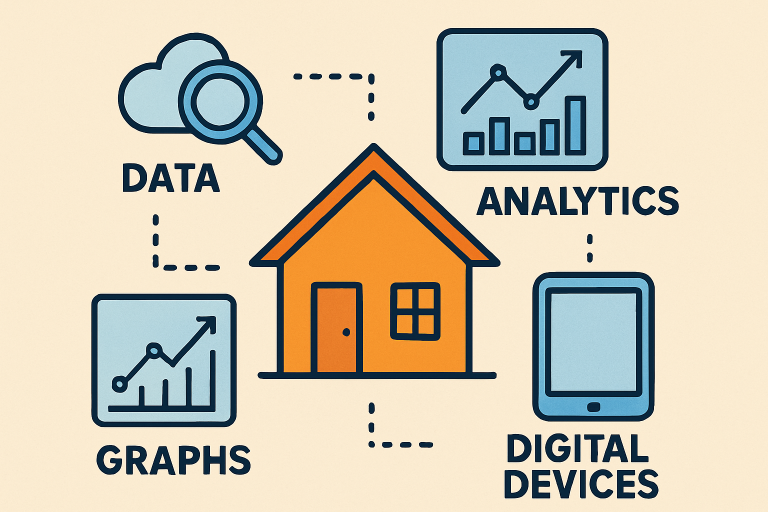
Traditional Real Estate Decision-Making: The Old Playbook
Historically, real estate decisions relied heavily on:
- Appraiser experience and subjective judgment
- Limited comparable sales data from static spreadsheets
- Basic demographic metrics and historical market trends
- Personal networks and word-of-mouth intelligence
- Cost-per-square-foot calculations and occupancy rates
This traditional approach offered minimal foresight and frequently missed nuanced market shifts that could dramatically impact investment outcomes. Decision-makers operated with incomplete information, often discovering critical factors only after committing significant capital.
The Data-Driven Transformation: A New Era
Today’s data-driven real estate ecosystem integrates:
Comprehensive Data Sources:
- Real-time market transaction data and listing intelligence
- Hyperlocal demographic trends and migration patterns
- Alternative data points (Yelp reviews, social media sentiment, mobile traffic)
- IoT sensor data from smart buildings
- Geographic Information Systems (GIS) mapping
- Energy consumption and sustainability metrics
- Economic indicators and interest rate forecasts
Advanced Technologies:
- Artificial Intelligence and machine learning algorithms
- Predictive analytics and automated valuation models
- Big data platforms processing millions of data points
- Real-time business intelligence dashboards
- Generative AI for market insights and trend forecasting
This evolution represents more than technological adoption—it’s a fundamental reconceptualization of real estate from an art form to a data science.
Key Applications of Data-Driven Strategies in Real Estate
1. Property Valuation and Automated Value Modeling
Data analytics has revolutionized property valuation methodologies, moving far beyond traditional approaches.
Traditional vs. Modern Valuation Factors:
| Traditional Valuation Metrics | Advanced Data Analytics Factors |
|---|---|
| Property age and square footage | Foot traffic patterns (daily visitor counts, duration) |
| Historical sales comparables | Social media sentiment and online review analysis |
| Neighborhood vacancy rates | Mobile phone signal patterns and density |
| Cost per square foot | Proximity to specific amenities (popular coffee shops, gyms) |
| Local zoning regulations | Energy consumption benchmarks |
| Basic demographic income data | Planned infrastructure projects and development pipelines |
Automated Value Modeling (AVM) leverages machine learning algorithms to determine property values by processing multiple data sources simultaneously. These models incorporate:
- Historical transaction patterns across similar properties
- Real-time market condition adjustments
- Neighborhood appreciation trajectories
- Local business performance indicators
- Environmental and sustainability ratings
The precision of modern AVMs enables buyers and sellers to reach pricing consensus faster, reducing negotiation friction and accelerating transactions.
2. Predictive Market Analysis and Trend Forecasting
Predictive analytics empower real estate professionals to anticipate market movements rather than merely reacting to them.
Key Predictive Capabilities:
Rental Rate Forecasting: Machine learning models analyze economic indicators, employment data, demographic shifts, and competitor pricing to predict future rental rates with remarkable accuracy—exceeding 90% in major metropolitan markets.
Emerging Neighborhood Identification: By tracking infrastructure investments, business openings/closures, and population migration patterns, investors can identify up-and-coming neighborhoods before they become widely recognized opportunities.
Market Disruption Detection: Big data analysis reveals small but pivotal differences between neighborhoods, uncovering disruptive patterns at granular levels that traditional analysis would miss entirely.
Demand Forecasting: Predictive models assess future demand by analyzing remote work trends, demographic shifts, and lifestyle preference changes, enabling developers to align projects with upcoming market needs.
3. Investment Decision-Making and Portfolio Optimization
Data-driven strategies transform investment approaches from reactive to proactive.
Strategic Investment Applications:
Due Diligence Acceleration: Comprehensive data platforms aggregate property tax history, zoning regulations, environmental reports, and market trends, condensing months of research into days or weeks.
High-Potential Asset Identification: AI algorithms screen thousands of properties simultaneously, identifying undervalued assets with growth potential based on predictive market modeling and comparative performance analysis.
Portfolio Diversification Strategy: Real-time analytics enable strategic asset allocation across geographic regions, property types, and risk profiles, responding dynamically to market fluctuations.
Real Estate Technology Integration: Platforms processing hyperlocal data about land use patterns, parcel potential, and market forecasts enable teams to evaluate 5 times more sites efficiently, as demonstrated by leading analytics providers.
4. Risk Assessment and Mitigation
Comprehensive data analysis equips investors with sophisticated risk management capabilities.
Multi-Layered Risk Evaluation Framework:
| Risk Category | Data Analytics Application |
|---|---|
| Market Volatility | Macroeconomic trend analysis, interest rate modeling, supply-demand equilibrium tracking |
| Property-Specific Risks | Historical maintenance records, building system performance data, environmental hazard mapping |
| Tenant/Occupancy Risk | Credit scoring algorithms, tenant retention predictive models, demographic fit analysis |
| Development Risk | Construction timeline forecasting, resource allocation optimization, cost overrun prediction |
| Regulatory Risk | Zoning change tracking, compliance monitoring, policy impact modeling |
| Climate/Environmental Risk | Weather pattern analysis, flood zone mapping, sustainability metric monitoring |
Practical Risk Minimization Strategies:
- Leverage Hyperlocal Crime Data: Analyze neighborhood safety trends to assess security risks before acquisition
- Monitor Economic Indicators: Track employment rates, GDP growth, and business formation data to gauge regional economic health
- Evaluate Infrastructure Plans: Access municipal development databases to understand upcoming projects that could impact property values
- Assess Environmental Compliance: Utilize sustainability databases to identify properties with potential remediation costs
5. Property Management and Operational Efficiency
Data analytics transforms day-to-day property management from reactive problem-solving to proactive optimization.
Revenue Management Optimization:
Dynamic pricing algorithms analyze:
- Competitor rental rates in real-time
- Seasonal demand fluctuations
- Local market supply-demand dynamics
- Historical pricing performance
- Tenant acquisition costs
These systems automatically adjust rental prices to maximize occupancy while optimizing revenue—a strategy that has proven highly effective in multifamily properties and commercial real estate.
Predictive Maintenance:
IoT sensors embedded in building systems generate continuous data streams monitoring:
- HVAC system performance and efficiency
- Plumbing pressure and flow anomalies
- Electrical load patterns
- Equipment vibration and temperature indicators
Predictive maintenance systems identify potential failures before they occur, reducing emergency repair costs by up to 30% while extending equipment lifespan and improving tenant satisfaction.
Tenant Selection and Mix Optimization:
For commercial properties, data analytics enables sophisticated tenant curation:
- Center-wide visitation analysis reveals overall foot traffic patterns
- Venue-specific performance tracking identifies high-performing tenants
- Demographic fit assessment ensures tenant offerings match area population
- Cross-shopping behavior analysis reveals complementary business opportunities
This data-driven approach creates synergistic tenant ecosystems that benefit all stakeholders—driving higher sales for tenants, improved retention for landlords, and enhanced customer experiences.
6. Marketing and Lead Generation
Data analytics revolutionizes real estate marketing from broad campaigns to precision targeting.
Customer Segmentation and Personalization:
Modern analytics platforms segment audiences based on:
- Online behavior and search patterns
- Social media engagement and preferences
- Past property viewing history
- Financial capacity indicators
- Lifestyle and preference profiles
Predictive Lead Identification:
Advanced algorithms identify potential sellers before they enter the market by analyzing:
- Mortgage status and equity positions
- Length of residency patterns
- Life event indicators (marriage, retirement, job changes)
- Property improvement permits
- Neighborhood turnover trends
This proactive approach enables perfectly timed marketing outreach, significantly improving conversion rates while reducing customer acquisition costs.
The Power of Non-Traditional Data Sources
One of the most transformative aspects of data-driven real estate is the integration of alternative data that extends far beyond traditional market metrics.
Alternative Data Sources Reshaping Valuations
Consumer Review Platforms:
- Yelp, Google Reviews, TripAdvisor data reveal neighborhood desirability
- Positive reviews for nearby establishments significantly boost perceived property values
- Rating trends indicate neighborhood trajectory (improving vs. declining)
Social Media Intelligence:
- Real-time sentiment analysis gauges neighborhood popularity
- Trending location tags signal emerging hotspots
- Community engagement metrics indicate social cohesion
Mobile Signal and GPS Data:
- Foot traffic density reveals commercial area vitality
- Visit duration patterns indicate destination attractiveness
- Cross-visitation analysis shows complementary business relationships
Energy and Utility Consumption:
- Lower energy use signals environmentally responsible communities
- Consumption patterns reveal actual occupancy vs. reported figures
- Efficiency metrics indicate building quality and operational costs
Local Business Landscape Changes:
- New business openings signal neighborhood growth
- Business closures may indicate economic challenges
- Business mix evolution reveals demographic shifts
Quantifying Non-Traditional Data Impact
Research demonstrates that models incorporating non-traditional data sources significantly outperform traditional analytics in explaining rent fluctuations across properties within the same zip code. These innovative datasets provide nuanced insights that licensed databases and conventional market trend data simply cannot capture.
Technology Enablers: AI, Machine Learning, and IoT
Artificial Intelligence and Machine Learning Applications
Deep Learning for Pattern Recognition:
- Neural networks identify complex market patterns invisible to human analysis
- Image recognition algorithms assess property conditions from aerial imagery
- Natural language processing extracts insights from text-heavy documents and reports
Generative AI for Competitive Advantage:
Organizations controlling large proprietary datasets can build customized AI models that:
- Generate unique market insights unavailable to competitors
- Predict trends in property values with exceptional precision
- Automate complex processes like property design optimization
- Create tailored investment recommendations based on firm-specific criteria
AI-Powered Portfolio Management:
Machine learning algorithms continuously optimize investment portfolios by:
- Monitoring real-time market conditions across all holdings
- Identifying underperforming assets requiring attention
- Recommending rebalancing strategies based on predictive forecasts
- Simulating various market scenarios to stress-test portfolios
Internet of Things (IoT) in Smart Buildings
IoT sensors transform buildings into data-generating ecosystems:
Occupancy and Space Utilization:
- Real-time occupancy tracking across all building zones
- Peak usage pattern identification for capacity planning
- Underutilized space detection for repurposing opportunities
- Hybrid work pattern analysis for flexible space design
Environmental Quality Monitoring:
- Indoor air quality tracking (CO2, VOCs, particulates)
- Temperature and humidity optimization
- Lighting and acoustic comfort measurement
- Energy consumption benchmarking
Building Systems Performance:
- HVAC efficiency monitoring and optimization
- Water usage tracking and leak detection
- Elevator performance and wait time analysis
- Security system integration and incident tracking
Geographic Information Systems (GIS)
GIS technology provides powerful spatial intelligence:
- Location Assessment: Evaluate sites based on proximity to transportation, amenities, and demographic clusters
- Risk Calculation: Map flood zones, earthquake fault lines, and environmental hazards
- Market Analysis: Visualize competitive landscapes and market saturation
- ROI Determination: Model development potential based on zoning and land use patterns
Corporate Real Estate: Data-Driven Space Strategy
The Cost of Guesswork in Corporate Real Estate
Many corporations still manage real estate portfolios using outdated methods, resulting in:
- Wasted expenditures on rent, utilities, and maintenance for under-utilized facilities
- Suboptimal employee experiences due to overcrowded or poorly distributed workspaces
- Ineffective planning for future property needs, expansions, or consolidations
With hybrid work models becoming permanent fixtures, traditional space planning approaches prove increasingly ineffective.
Turning Buildings into Strategic Data Assets
Modern corporate real estate leverages smart building management solutions that combine:
Occupancy Analytics:
- Identifying unused meeting rooms and zones for repurposing
- Revealing peak usage patterns to balance occupancy and comfort
- Comparing performance across multiple sites for portfolio-level insights
Energy and Sustainability Tracking:
- Measuring and tracking energy performance to support ESG goals
- Benchmarking energy use per occupant across locations
- Identifying retrofit opportunities with highest environmental impact
Evidence-Based Space Planning:
| Traditional Approach | Data-Driven Approach |
|---|---|
| Assumes standard occupancy ratios | Uses actual occupancy data from sensors |
| Plans based on headcount | Plans based on space utilization patterns |
| Reactive to space complaints | Proactive space optimization |
| Annual reviews of space needs | Continuous real-time monitoring |
| Gut feeling about consolidation | Data-proven consolidation opportunities |
Real-World Corporate Real Estate Impact
A global enterprise using integrated analytics platforms can:
- Identify under-utilized sites and consolidate space before lease renewals, saving millions annually
- Benchmark energy consumption per occupant across locations to prioritize efficiency improvements
- Optimize workplace design using occupancy and environmental comfort data
- Support flexible work policies with evidence-based space allocation strategies
Sustainability and ESG: Data-Driven Environmental Performance
The Growing Importance of Sustainability Metrics
Environmental, Social, and Governance (ESG) considerations increasingly drive real estate investment decisions. Data analytics provide the measurement and transparency necessary to demonstrate sustainability commitments.
Key Sustainability Applications:
Energy Efficiency Tracking:
- Real-time energy consumption monitoring
- Comparative benchmarking against similar properties
- Identification of inefficiencies requiring remediation
- ROI calculation for energy-saving improvements
Carbon Footprint Measurement:
- Comprehensive emissions tracking (Scope 1, 2, and 3)
- Predictive modeling of decarbonization pathways
- Verification of carbon reduction claims
- Support for carbon credit programs
Water Conservation Monitoring:
- Usage pattern analysis to detect waste
- Leak identification through anomaly detection
- Efficiency benchmarking and improvement tracking
Waste Management Optimization:
- Waste stream analysis and diversion rate tracking
- Recycling program effectiveness measurement
- Circular economy initiative monitoring
Green Building Certification Support:
- Data collection for LEED, BREEAM, and other certifications
- Continuous performance verification
- Compliance documentation automation
Sustainability Ratings and Benchmarking
Specialized sustainability ratings providers offer:
- Global performance benchmarks enabling property-to-property comparisons
- Industry-standard metrics facilitating transparent reporting
- Investment decision support for ESG-focused portfolios
- Tenant attraction tools for environmentally conscious occupants
Sector-Specific Applications of Data Analytics
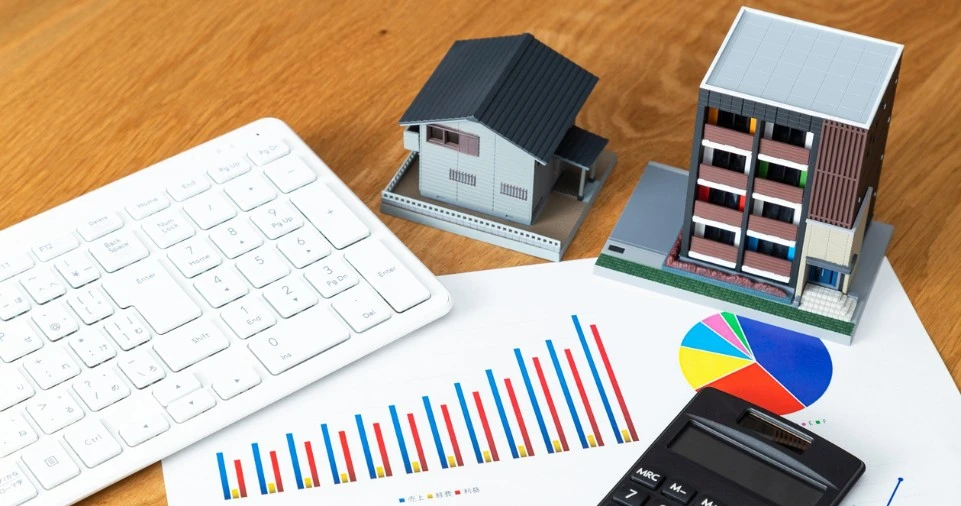
Building Construction and Development
The U.S. construction sector report, projected to surpass $2.65 trillion by 2029, increasingly relies on data analytics:
Development Opportunity Identification:
- Third-party data analysis to identify viable development sites
- Competitor monitoring and market condition assessment
- Demographic trend analysis for project type selection
Project Planning and Risk Management:
- Historical construction data for realistic timeline planning
- Predictive analytics for budget control and resource optimization
- Risk identification through pattern recognition in past projects
Operational Efficiency:
- IoT monitoring of materials, labor, and equipment utilization
- Real-time project tracking and progress reporting
- Supply chain optimization through data integration
Lead Generation:
- Data providers help contractors and subcontractors identify upcoming projects
- Bid opportunity alerts based on project criteria matching
- Competitive intelligence on market activity
Revenue Management in Multifamily and Commercial Properties
Dynamic pricing algorithms revolutionize rental revenue optimization:
Real-Time Rate Adjustments:
- Automated pricing based on market trends and competitor rates
- Supply-demand equilibrium monitoring
- Seasonal fluctuation accommodation
Predictive Revenue Forecasting:
- Anticipation of market condition shifts
- Proactive pricing strategy adjustments
- Occupancy and profit maximization without manual intervention
Performance Analytics:
- Historical yield analysis to refine strategies
- Tenant acquisition cost tracking
- Lifetime value calculations for retention focus
Overcoming Implementation Challenges
Challenge 1: Data Overwhelming and Quality Issues
Problem: The sheer volume of available data can paralyze decision-making rather than enhance it.
Solutions:
- Focus on identifying the most relevant data streams aligned with specific business objectives
- Implement robust data collection and validation processes
- Invest in data governance frameworks ensuring accuracy and consistency
- Start with limited, high-impact datasets before expanding
Challenge 2: Skills Gap in Real Estate Analytics
Problem: Professionals skilled in both real estate domain knowledge and advanced analytics remain scarce.
Solutions:
- Provide ongoing training programs for existing staff
- Partner with specialized analytics firms or consultants
- Recruit hybrid talent with cross-functional expertise
- Foster a data-driven culture throughout the organization
- Leverage user-friendly analytics platforms requiring minimal technical expertise
Challenge 3: Technology Integration Complexity
Problem: Integrating new analytics systems with legacy real estate software proves challenging.
Solutions:
- Prioritize platforms offering robust API connectivity
- Implement phased rollouts rather than full replacements
- Work with vendors providing integration support
- Consider cloud-based solutions for easier connectivity
Challenge 4: Cost and ROI Justification
Problem: Initial investments in data infrastructure and analytics tools require executive buy-in.
Solutions:
- Start with pilot projects demonstrating clear ROI
- Calculate opportunity costs of not adopting data-driven approaches
- Benchmark against competitors utilizing analytics successfully
- Quantify efficiency gains and risk mitigation benefits
Building Your Data-Driven Real Estate Strategy: A Step-by-Step Framework
Phase 1: Assessment and Goal Setting (Weeks 1-4)
Step 1: Define Clear Objectives
- Identify specific business challenges data analytics should address
- Set measurable goals (e.g., reduce vacancy rates by 15%, improve valuation accuracy to 90%)
- Align data initiatives with broader business strategy
Step 2: Audit Current Data Capabilities
- Catalog existing data sources and quality
- Assess current technology stack and integration points
- Identify gaps between current state and desired outcomes
Step 3: Prioritize Use Cases
- Rank potential applications by impact and feasibility
- Focus on quick wins that build organizational confidence
- Plan for scaling successful initiatives
Phase 2: Infrastructure Development (Months 2-4)
Step 4: Establish Data Collection Processes
- Implement systematic data gathering across all relevant sources
- Ensure data quality controls and validation mechanisms
- Create standardized formats and taxonomies
Step 5: Select Analytics Tools and Platforms
- Evaluate solutions based on:
- Ease of use and user interface quality
- Integration capabilities with existing systems
- Scalability for future growth
- Vendor support and training availability
- Cost and licensing structure
Step 6: Build or Acquire Analytics Expertise
- Hire specialists or train existing staff
- Consider partnerships with analytics firms
- Develop internal best practices and playbooks
Phase 3: Implementation and Optimization (Months 5-12)
Step 7: Launch Pilot Projects
- Start with limited scope, high-impact initiatives
- Monitor performance against defined metrics
- Gather user feedback and iterate
Step 8: Scale Successful Initiatives
- Expand proven use cases across the organization
- Integrate insights into standard workflows
- Automate routine analytical processes
Step 9: Foster a Data-Driven Culture
- Make data accessibility a priority for all stakeholders
- Encourage evidence-based decision-making at all levels
- Celebrate wins and share success stories
- Provide ongoing training and support
Phase 4: Continuous Improvement (Ongoing)
Step 10: Monitor and Refine
- Regularly assess analytics performance and accuracy
- Incorporate new data sources as they become available
- Update models and algorithms based on market changes
- Stay informed about emerging technologies and methodologies
The Future of Data-Driven Real Estate

Emerging Trends Shaping the Industry
Increased AI Adoption: Artificial intelligence and machine learning will continue advancing, with potential to generate up to $4.4 trillion in productivity gains across industries, including real estate.
Blockchain for Transaction Transparency: Distributed ledger technology promises to streamline transactions, reduce fraud, and create immutable property records.
Virtual and Augmented Reality Integration: 3D modeling, virtual tours, and AR property visualization will become standard, enhanced by AI-driven recommendations.
Real-Time Market Intelligence: Continuous data feeds will enable instantaneous market analysis and decision-making, replacing periodic reporting cycles.
Hyper-Personalization: Advanced customer profiling will enable individualized property recommendations and marketing messages at scale.
Climate Risk Integration: Environmental and climate data will become standard components of valuation and investment analysis.
Democratization of Analytics: User-friendly platforms will make sophisticated analytics accessible to smaller firms and individual investors, not just large institutions.
Preparing for the Data-Driven Future
Organizations that thrive will:
- Embrace Continuous Learning: Stay updated on emerging technologies and analytical methodologies
- Invest in Technology Infrastructure: Build scalable, flexible data platforms
- Cultivate Analytics Talent: Develop teams with both real estate expertise and analytical skills
- Prioritize Data Quality: Recognize that insights are only as good as underlying data
- Maintain Ethical Standards: Use data responsibly, respecting privacy and avoiding discriminatory practices
- Balance Technology with Human Judgment: Leverage data insights while retaining expert oversight
Practical Action Steps: Getting Started Today
For Real Estate Investors
Immediate Actions:
- Identify three key investment decisions coming up in the next 6 months
- Research analytics platforms or services addressing those specific needs
- Set up alerts for key market indicators and emerging neighborhood trends
- Begin collecting data on current portfolio performance metrics
Medium-Term Goals:
- Implement automated valuation tools like Zillow for preliminary property assessments
- Subscribe to alternative data providers for enhanced market intelligence
- Establish data-driven criteria for investment screening
For Property Managers
Immediate Actions:
- Audit current property management software for available analytics features
- Begin tracking key metrics: occupancy patterns, maintenance costs, tenant satisfaction
- Implement basic predictive maintenance for critical building systems
- Test dynamic pricing strategies for a subset of units
Medium-Term Goals:
- Deploy IoT sensors for occupancy and environmental monitoring
- Develop tenant segmentation strategies based on behavior and preferences
- Create data dashboards for real-time operational insights
For Real Estate Developers
Immediate Actions:
- Analyze historical project data to identify patterns in successful developments
- Begin monitoring demographic and economic trends in target markets
- Evaluate GIS tools for site selection and feasibility analysis
- Track competitor developments and market absorption rates
Medium-Term Goals:
- Implement predictive analytics for project timeline and budget forecasting
- Leverage 3D modeling and simulation for design optimization
- Build partnerships with data providers offering construction market intelligence
For Corporate Real Estate Managers
Immediate Actions:
- Measure current space utilization across facilities
- Identify under-utilized areas for potential consolidation
- Begin tracking energy consumption per square foot
- Survey employees about workspace preferences and usage patterns
Medium-Term Goals:
- Implement smart building sensors for continuous monitoring
- Develop flexible space allocation models based on actual usage
- Create sustainability dashboards tracking ESG performance
- Use data insights to negotiate better lease terms
Conclusion: Data is the New Foundation of Real Estate Success
The transformation of real estate through data-driven strategies represents far more than a technological upgrade—it’s a fundamental reimagining of how the industry operates. From property valuation and investment decision-making to asset management and sustainability initiatives, data analytics now underpins every critical function.
The evidence is compelling: organizations embracing data-driven approaches achieve faster transactions, more effective marketing campaigns, significantly improved ROI, and enhanced operational efficiency. They identify opportunities competitors miss, mitigate risks more effectively, and make decisions with confidence backed by evidence rather than intuition alone.
The industry trajectory is clear. With the real estate analytics market expanding from $4.5 billion to a projected $15.8 billion within the next decade, those who delay adoption risk falling irreversibly behind. The question is no longer whether to embrace data-driven strategies, but how quickly and comprehensively to implement them.
Success in tomorrow’s real estate market belongs to those who can transform vast datasets into actionable insights, leverage advanced technologies to gain competitive advantages, and build organizational cultures that prize evidence over assumptions.
Your Next Steps
The data-driven real estate revolution is not coming—it’s already here. The opportunity to gain a competitive edge exists today, but the window won’t remain open indefinitely.
Take action now:
- Assess your current data capabilities and identify the gaps holding you back
- Define clear, measurable objectives for your data initiatives
- Start small with high-impact pilot projects that demonstrate ROI
- Invest in the right technology and talent to support your vision
- Commit to building a data-driven culture throughout your organization
The real estate professionals who thrive in the coming years will be those who recognize that data isn’t just supporting their decisions—it’s fundamentally transforming how decisions should be made.
Are you ready to lead this transformation, or will you be left behind?