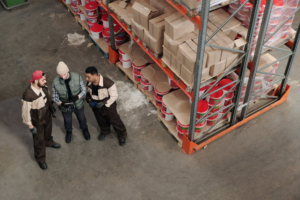
Australian businesses cannot thrive without an efficient supply chain. Whether they need to ship across thousands of kilometers of outback wilderness or through busy cities by the sea, they require a system that works like a clock. In recent years, the industry has paid too much attention to GPS technology and real-time alerts. Software developers keep promoting the idea that the perfect outcome would be if the location of a freight could be pinpointed accurately.
The truth, however, is that a location on the screen will not move the cargo. Instead, it is a different metric that should matter when you are selecting a supplier.
The Evolution of Logistics
For a decade now, visibility has been the most important aspect in supply chain management. It made sense because companies invested in technologies that provided an accurate map showing where a shipment was currently. There is no doubt that such information offers peace of mind. Yet, knowing that a truck is sitting at a traffic jam on the Hume Highway does not advance the shipment. Instead, what really matters in many cases is dependability.
Visibility Tells, Reliability Delivers
If a shipment is sitting in a port in Melbourne, that is very useful information. If the supplier avoids delays in the first place, that is an even greater value. The former will allow you to see when you receive a late shipment due to traffic problems. The latter will help your supplier to avoid the issue in advance. In addition, Australian businesses need raw materials and finished products, but they do not need location updates on a dashboard to sell or assemble these products. As a result, it is more crucial to find a dependable rather than a visible supplier.
The Building Blocks of Dependability
To find a trustworthy supplier like Bricon Industries, it is essential to dig deeper into their internal processes rather than focus on technologies they employ. In essence, the best suppliers demonstrate several key traits that distinguish them from the rest.
Reliant Processes
First of all, a great supplier always operates like a Swiss watch. Its systems are robust enough to handle any challenges, and the processes are designed in a way that makes delivery happen reliably. A supplier does not require heroic feats to get the job done; instead, it relies on dependable processes to achieve this result. By doing so, the supplier makes it possible to carry less buffer stock, which helps in saving capital.
Open and Proactive Communication
Dependability also implies how a supplier deals with potential complications. Bushfires or floods in Queensland and New South Wales may make things complicated, and it is always wise to prepare ahead. In addition, you do not want a supplier who waits until you ask them where the shipment is at. Instead, they should communicate proactively to explain the problem and its solution.
Effective and Flexible Contingency Plans
Finally, a good supplier has no single point of failure. They do not bet on the reliability of a particular logistics firm but works closely with several of them. If one logistics firm experiences issues, the supplier can turn to others without losing time.
Creating the Future of Your Company
In the modern world, it is extremely important to build a reliable foundation. Sure, technology is very helpful, but it must not become the only focus. To grow your company successfully, you must select suppliers who are reliable and dependable. Thus, when you are evaluating their qualities, you must consider their dependability above anything else.